


Understanding Canine Social Cues

I have a story for you. It may be one that you find very familiar since you’ve heard something very similar from someone you know or it could be a story that you’ve told yourself. It goes something like this:
I couldn’t figure out what was wrong with my dog; sometimes, it was fine to pet him, but other times, he’d growl softly. I couldn’t find anything to suggest that he was uncomfortable – no skin irritation, no inflammation in the ears or anything like that – but at some point, the growling would start. Just kind of a soft, gentle rumbling. Finally, it hit me. He was raised with cats, and he was purring!
I’ve heard this story over and over, from many, many people, but it never fails to bring a smile to my face. Dogs really are great communicators. Sometimes, though, it’s hard to decipher exactly what it is they’re trying to tell us. We don’t have a spoken language in common, so we have to work at figuring out what our dogs are trying to tell us with those yips, grunts, growls and barks.
How do we do that? We look at context.
Is My Dog Mad at Me?
Back to the story of the purring dog. Once you factor in the cats, it’s pretty easy to figure out what’s going on in this scenario. The context is obvious. You pet the dog, and the dog growls softly but shows no signs of aggression. You stop petting the dog, and he continues to growl, and perhaps nudges you as if to say, “That felt good; please don’t stop.”
This dog is not mad at you. He’s simply learned another method of communication; he “speaks cat”!
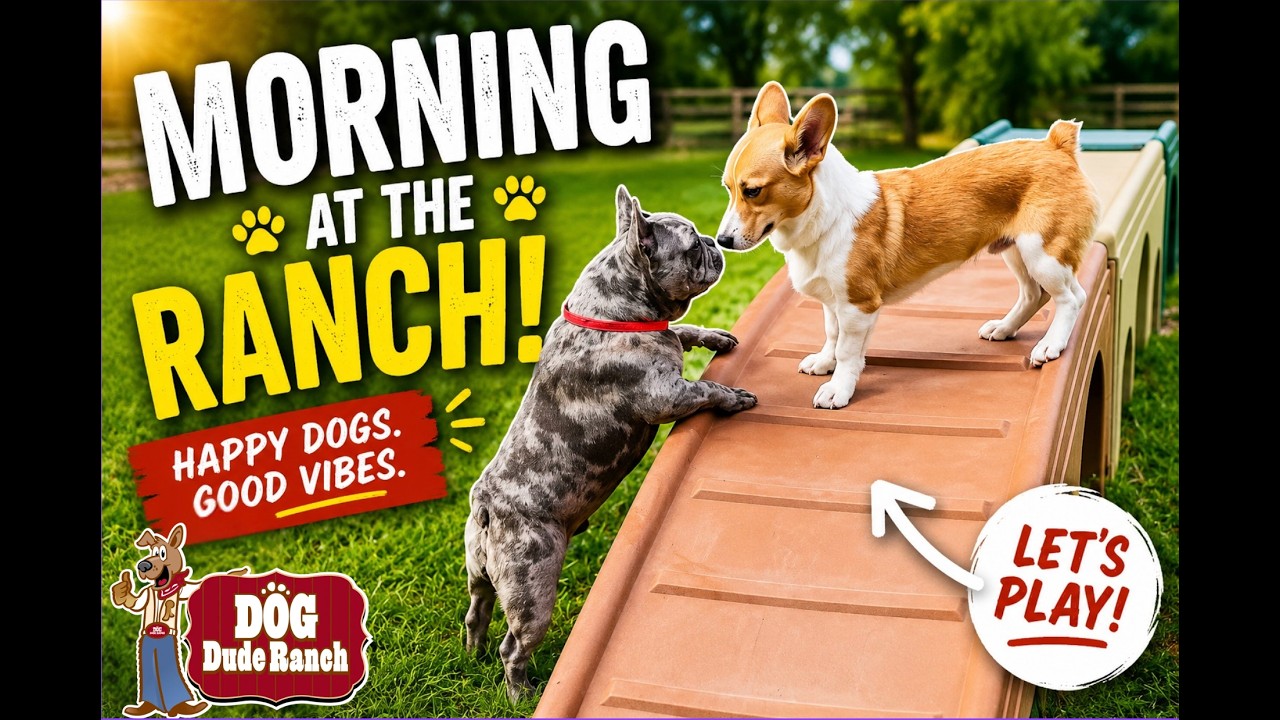
Another instance in which dogs might be very vocal is during play. You know how it is with dogs: they love to play vigorously, and they’ll make all sorts of noises that might sound very aggressive, when what they really mean is, “I’m having a blast; let’s keep it up!”
How Can You Be Sure?
If you’re not sure that what you’re hearing are “happy sounds,” take a look at the dog’s body language. Keep in mind that dogs can only “verbalize” by means of noises that are invariably going to sound, to humans, like expressions of aggressiveness.
With the “purring” dog, the tip-off is that there are no other signs indicating that the dog is displeased. During play, look for signs like the “puppy bounce”; this is where the dog appears to “bow” down; he lowers the front of his body and might also wag his tail. He’s trying to get your attention, saying, “Let’s have some fun!”
As for the tail, though, don’t assume that wagging necessarily means that your dog is in a great mood. Sometimes, wagging can also communicate aggression, frustration or fear, especially if it’s accompanied by rigid posture. So, look for the “puppy bounce.” This is one canine social cue that’s never in doubt; the bounce is never a sign of aggression.
When Should I Worry?
If there is no “bounce,” and the growling is escalating, that’s not a good sign. A dog will always give you cues – many of them, actually – before he bites, and it’s up to you to know how to interpret these canine social cues. A dog that’s gearing up to bite will usually do the following, in order:
Growl softly
Growl louder
Growl really loudly
Bark
Bark louder
Bark really loudly
Snap in the air close to you
Snap in the air closer to you
Bite
In other words, you’ll usually get a whole lot of canine social cues before you actually end up being bitten. Dogs don’t typically like conflict, don’t want to bite, and will do a lot to avoid biting. If you read the cues, you’re probably going to be fine. If you don’t… well, don’t say I didn’t warn you.
What If My Dog Bites?
Okay, we’re not going into “stranger bites” here. That’s a whole different issue, and perhaps a topic for another post. If your dog bites, though, chances are that you’ve chosen to ignore as many as eight (see above) canine social cues that should have led you to think that it might happen.
If you ignored those cues, you’ll get no sympathy from me if you decide that you have a “bad dog” or if you want to have him put down. It’s highly unlikely that your dog is just somehow “naturally” aggressive, and far more likely that you have simply not properly read the cues.
The Final Word
If your dog appears to be aggressive, look at what’s going on. Sometimes, a dog will be aggressive if he is in pain. Other times, it could be due to the dog being very territorial, competing for breeding rights, or because it’s afraid.
Aggression can almost always be corrected, though, with positive reinforcement training. However, in order to correct it, you need to know what’s causing it. You also need to know when the canine social cues your dog is offering actually indicate aggression, and when they could mean something else – happiness misinterpreted as aggression when being petted, for instance, as in the case of the “purring” dog.
I think what I’m saying is, “Watch the signals.” Think about how your dog communicates. Communication, after all, is the way toward a good relationship with your dog. You also want to be aware of how your dog communicates with others; you want to be able to say, with full confidence, “He’s not growling; he’s purring.”
Remember, it’s not all barks, yips and growls; body language enters into it, too. So listen, watch, and learn. When you know the canine social cues, you’ll be better able to communicate with your dog, and better able to tell other people what your dog is trying to say.
Author Bio: Franklin Medina loves dogs of all breeds, and loves writing about them. He is fluent in several languages, and although not 100% there yet, he is reasonably good with “Dogspeak.” You can read more from Franklin at www.SimplyForDogs.com.







Comments